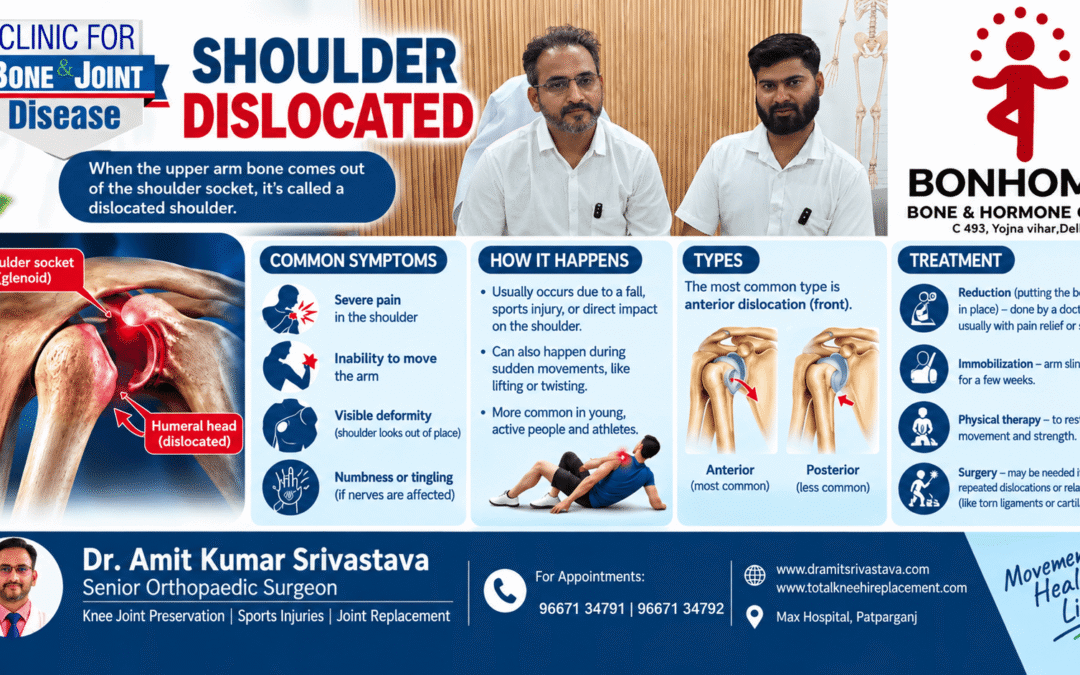
A shoulder dislocation occurs when the upper end of the arm bone (humerus) comes out of the shoulder socket. Because the shoulder joint allows a wide range of movement, it can be vulnerable to dislocation, particularly after a fall, sports injury, or sudden impact.
What Is a Shoulder Dislocation?
The shoulder is a ball-and-socket joint. In a dislocation, the ball-shaped head of the humerus moves completely out of the socket. The surrounding muscles, ligaments and other soft tissues may also be stretched or injured.
A shoulder dislocation should be assessed by a medical professional, particularly when there is severe pain, deformity or inability to move the arm.
Common Symptoms of a Dislocated Shoulder
Typical symptoms may include:
- Severe shoulder pain
- Difficulty or inability to move the arm
- A visible change in the shape of the shoulder
- Swelling or bruising
- Numbness or tingling in the arm or hand
- A feeling that the shoulder is out of place
Numbness, persistent pins and needles, or difficulty moving the arm or hand should receive prompt medical attention.
What Causes Shoulder Dislocation?
A shoulder can become dislocated because of:
- Sports-related injuries
- Falls
- Sudden impact or trauma
- Accidents
- Movements that place excessive force on the shoulder
People with naturally flexible joints or previous shoulder instability may also have a greater tendency toward recurrent dislocation.
Types of Shoulder Dislocation
Shoulder dislocations are commonly described according to the direction in which the humeral head moves.
1. Anterior Shoulder Dislocation
The upper arm bone moves toward the front of the body. This is the most common direction of traumatic shoulder dislocation.
2. Posterior Shoulder Dislocation
The humeral head moves toward the back of the shoulder. This type is less common.
How Is a Dislocated Shoulder Diagnosed?
A doctor will examine the shoulder and assess movement, sensation and circulation. An X-ray is commonly used to confirm the dislocation and check for associated bone injury. Additional imaging may be required when soft-tissue or structural damage is suspected.
Treatment for Shoulder Dislocation
Treatment depends on the injury and the patient’s individual circumstances. Common management may include:
Reduction:
A healthcare professional carefully returns the shoulder joint to its normal position. A dislocated shoulder should not be put back into place by yourself.
Immobilization:
A sling may be recommended for comfort and to allow the injured tissues to settle.
Physiotherapy:
After the appropriate initial recovery period, physiotherapy can help restore movement, strength and shoulder stability.
Surgery:
Some patients may require surgery, particularly when there is significant structural damage or repeated shoulder dislocation.
Recovery After Shoulder Dislocation
Recovery varies according to the severity of the injury and whether there is associated damage. Many shoulder dislocations take several weeks to heal, and rehabilitation is often an important part of returning to normal activities.
A previous shoulder dislocation can also increase the risk of another dislocation, so follow-up and prescribed rehabilitation are important.
When Should You Seek Medical Help?
Seek urgent medical attention if a shoulder injury causes:
- Severe or sudden pain
- Inability to move the arm
- A visibly deformed shoulder
- Significant swelling
- Numbness or persistent tingling
- Loss of sensation or difficulty moving the hand
If you suspect a dislocation, do not attempt to reposition the shoulder yourself. Support the arm and seek medical care.
A shoulder dislocation is a significant joint injury that requires appropriate medical assessment. Early diagnosis, professional treatment and a structured rehabilitation program can help restore shoulder movement and stability. If you have experienced a shoulder injury or recurrent shoulder dislocation, consultation with an orthopaedic specialist can help determine the appropriate treatment plan.