

ACL Reconstruction Surgery in Delhi — Expert Arthroscopic Care by Dr Amit Kumar Srivastava
Is the knee unstable after an injury? Giving way on stairs or during sport? You may have an ACL tear. Get an accurate diagnosis and a clear treatment plan from one of Delhi’s most experienced arthroscopic knee surgeons.
Introduction: When Your Knee Stops Trusting You
An ACL (anterior cruciate ligament) tear is one of the most common and serious knee injuries. Athletes, fitness extremists, and working professionals all over Delhi NCR have experienced the sensation: a sudden twist, a snap in the knee, and the strange feeling that the joint is no longer solid.
The good news is that arthroscopy-assisted ACL restoration surgery has become quite dependable, with recovery times ranging from 6 to 9 months. Dr Amit Kumar Srivastava, the best arthroscopic and joint replacement surgeon in Delhi, has helped hundreds of patients restore full knee function using minimally invasive arthroscopic procedures.
This page covers everything you need to know, from what causes an ACL tear to what the surgery involves, recovery expectations, costs in Delhi, and how to decide if surgery is right for you.
What Is the ACL and Why Does It Tear?
What the ACL Does
The anterior cruciate ligament (ACL) is one of four major ligaments inside your knee joint. It runs diagonally through the middle of the knee and does two critical jobs:
- Controls forward movement of the shin bone (tibia) relative to the thigh bone (femur)
- Stabilises the rotation of the knee during pivoting, cutting, and jumping
Without an intact ACL, the knee “gives way” especially during sudden direction changes, landing from a jump, or even walking on uneven ground.
Common Causes of ACL Tears
- Sudden stop-and-pivot movements during sports (football, basketball, badminton, kabaddi).
- Landing awkwardly from a jump.
- Direct collision or blow to the knee.
- Hyperextension of the knee joint.
- Decelerating rapidly while running.
ACL injuries are 2–8x more common in women due to anatomical and biomechanical differences in knee alignment.
Symptoms of an ACL Tear: What to Watch For
If you experienced any of the following, get your knee evaluated immediately:
- A loud “pop” at the time of injury.
- Immediate swelling within 2-6 hours of damage.
- Knee instability: the joint feels like it “shifts” or “gives way”.
- Inability to support full weight on the afflicted leg.
- The loss of an entire range of motion.
- Pain and discomfort in the knee joint area.
Not all ACL tears cause severe pain at first. Some patients walk off the field before swelling sets in. Do not delay diagnosis based on pain level alone.
Diagnosis: How We Confirm an ACL Tear
- Physical examination – Lachman test, anterior drawer test, pivot shift test.
- MRI scan – the gold standard for confirming ACL tear and checking for associated cartilage or meniscus damage.
- X-ray – to rule out associated bone injury.
ACL Tear: Do You Always Need Surgery?
When Non-Surgical Treatment May Work
Not every ACL tear requires surgery. Conservative (non-surgical) management may be appropriate if:
- You have a low level of exercise (no sports or strenuous physical work).
- The tear is just partial, yet stability is still maintained.
- You are willing to adjust your activity level over time.
- Other knee structures (meniscus and cartilage) are intact.
Non-surgical ACL management includes:
- Structured physiotherapy and muscle strengthening.
- Knee bracing for support.
- Activity modification.
- Anti-inflammatory medications for pain management.
When Surgery Is the Right Choice
Surgery is typically recommended when:
- You are an athlete or active person looking to return to sport.
- In daily activity, the knee exhibits substantial instability.
- You have a meniscus or cartilage damage.
- Non-surgical treatment failed to restore stability.
- You are young (under 40) with strong functional requirements.
- Your career or lifestyle needs both knees to be reliable.
Ask Dr Amit Kumar Srivastava: If you’re unsure whether you need surgery, a specialist evaluation will give you a clear, personalised recommendation based on your MRI, knee stability test, and activity goals.
ACL Reconstruction Surgery: How It Works (Step by Step)
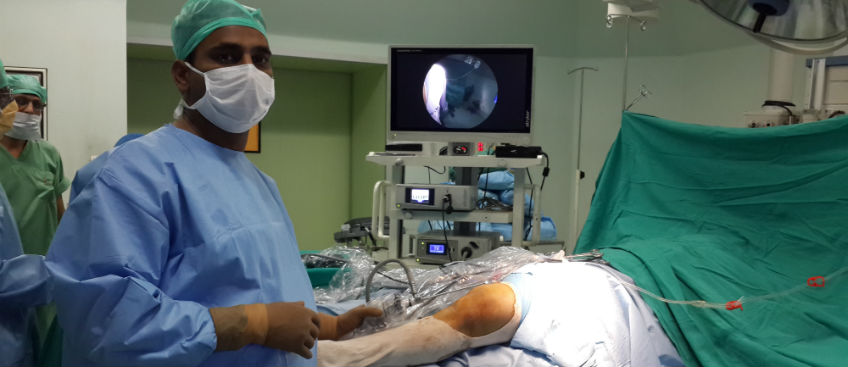
ACL reconstruction surgery in Delhi is performed using arthroscopy, a minimally invasive technique that uses a tiny camera (arthroscope) and small instruments inserted through 2–3 small cuts (less than 1 cm each) around the knee. There is no large open incision.
The Procedure — Simplified
Step 1: Anaesthesia Surgery is performed under spinal or general anaesthesia. Most procedures take 60–90 minutes.
Step 2: Arthroscopic Assessment The surgeon inserts the arthroscope through a small portal. The inside of the knee is visualised on a monitor. The torn ACL and any associated damage (meniscus, cartilage) are assessed.
Step 3: Graft Harvesting The new ligament (graft) is harvested — most commonly from the hamstring tendons or patellar tendon (see below). The graft is prepared to mimic the natural ACL.
Step 4: Tunnel Preparation Small bone tunnels are drilled precisely into the femur (thigh bone) and tibia (shin bone) at the anatomical ACL attachment points.
Step 5: Graft Placement and Fixation The prepared graft is threaded through the tunnels and secured using specialised fixation devices (titanium screws, buttons, or anchors). The graft is tensioned to restore natural knee stability.
Step 6: Closure and Dressing. The small portals are closed with sutures. A compression bandage and knee brace are applied.
Types of Grafts Used in ACL Reconstruction
The “graft” is the tissue used to replace your torn ACL. Each has advantages depending on patient age, activity level, and associated injuries.
1. Hamstring Tendon Graft (Semitendinosus-Gracilis)
- Most widely used in India and around the world.
- Harvested from the rear of the thigh, same leg.
- Smaller incision, less donor site pain.
- Good strength and genuine tissue feel.
- The biological time required for integration is slightly longer.
- Best for: Most patients, especially those not involved in high-impact kneeling sports
2. Patellar Tendon Graft (BTB — Bone-Tendon-Bone)
- Harvested from the front of the knee (kneecap tendon)
- Fixation points exhibit strong bone-to-bone healing.
- Traditionally regarded as the “gold standard” for elite athletes.
- Slightly increased anterior knee soreness after surgery.
- Best for: High-level athletes requiring maximum stability
3. Quadriceps Tendon Graft
- Used in revision surgeries or when other grafts are unavailable
- Larger, robust graft option
4. Allograft (Donor Tissue)
- Cadaveric tendon, used in revision ACL surgeries or specific cases
- No donor site morbidity for the patient
- Higher re-rupture rate in young, active patients, not the first choice for athletes under 25
Dr Amit Kumar Srivastava will recommend the most appropriate graft type for your specific case based on your age, activity level, knee anatomy, and surgical history.
ACL Reconstruction Recovery Timeline
Recovery after arthroscopic ACL reconstruction surgery in Delhi follows a structured, milestone-based protocol. Here is what most patients can expect:
| Phase | Timeline | What Happens |
| Immediate Post-Op | Days 0–7 | Brace, crutches, ice, wound care. Gentle ankle pumps begin. |
| Early Rehab | Weeks 1–4 | Swelling reduces. Range of motion exercises start. Weight bearing progresses. |
| Strength Building | Weeks 4–12 | Quadriceps and hamstring strengthening. Walking without crutches. |
| Functional Training | Months 3–5 | Cycling, swimming, and straight-line jogging were introduced. |
| Sport-Specific Training | Months 5–7 | Cutting, pivoting, and agility drills under physiotherapy guidance. |
| Return to Sport | Months 6–9 | Full return to sport after clearance by surgeon + physiotherapist. |
Important Recovery Notes
- Driving: Typically allowed at 4–6 weeks (right leg surgery)
- Office work/desk jobs: Return within 2–3 weeks
- Full joint recovery (graft maturation): Takes 12–18 months, even if you feel 100% at 6 months
- Physiotherapy is non-negotiable: skipping rehab is the #1 reason for re-injury
Benefits of Arthroscopic ACL Reconstruction
- Minimally invasive, no large open cut
- Faster recovery vs. open surgery
- Reduced post-operative pain
- Lower infection risk
- Smaller scars, better cosmesis
- Same-day or next-day discharge (most cases)
- High success rate, 90–95% of patients return to pre-injury activity level
- Long-term protection of knee cartilage from secondary damage
Risks and Complications
ACL reconstruction surgery in Delhi is a safe, well-established procedure. However, like all surgeries, it carries some risks:
- Infection (less than 1% with the arthroscopic technique)
- Deep vein thrombosis (DVT) can be prevented with blood thinners and early mobilisation.
- Graft failure or re-rupture (most common in patients who return to sport too early)
- Stiffness or limited range of motion (arthrofibrosis)
- Numbness around the incision site
- Donor site discomfort (hamstring weakness, patella pain)
- Anaesthesia-related risks
The risk of serious complications is significantly reduced when surgery is performed by an experienced arthroscopic surgeon using modern fixation techniques. Patient compliance with post-operative rehabilitation is equally critical.
Who Is the Best ACL Reconstruction Surgeon in Delhi?
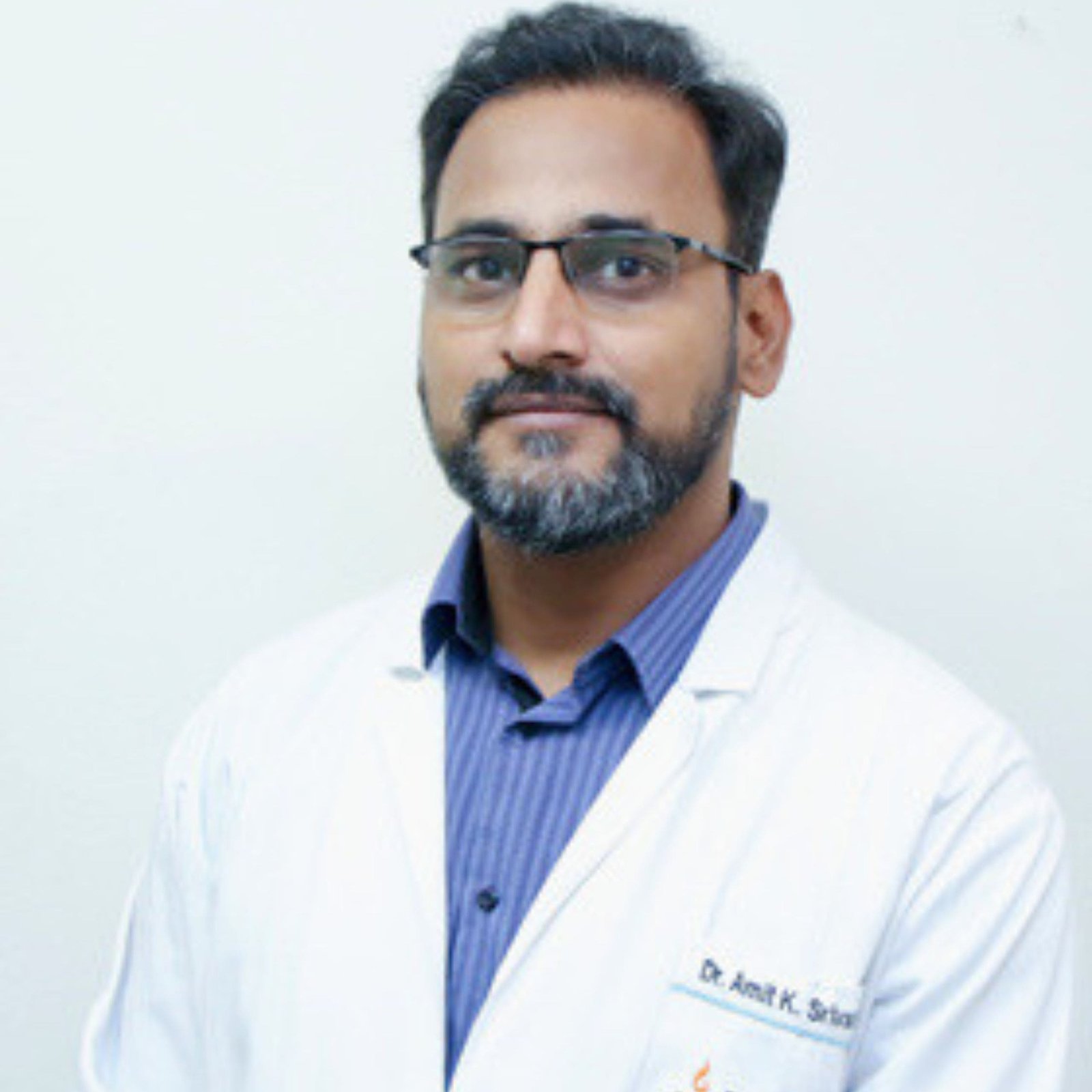
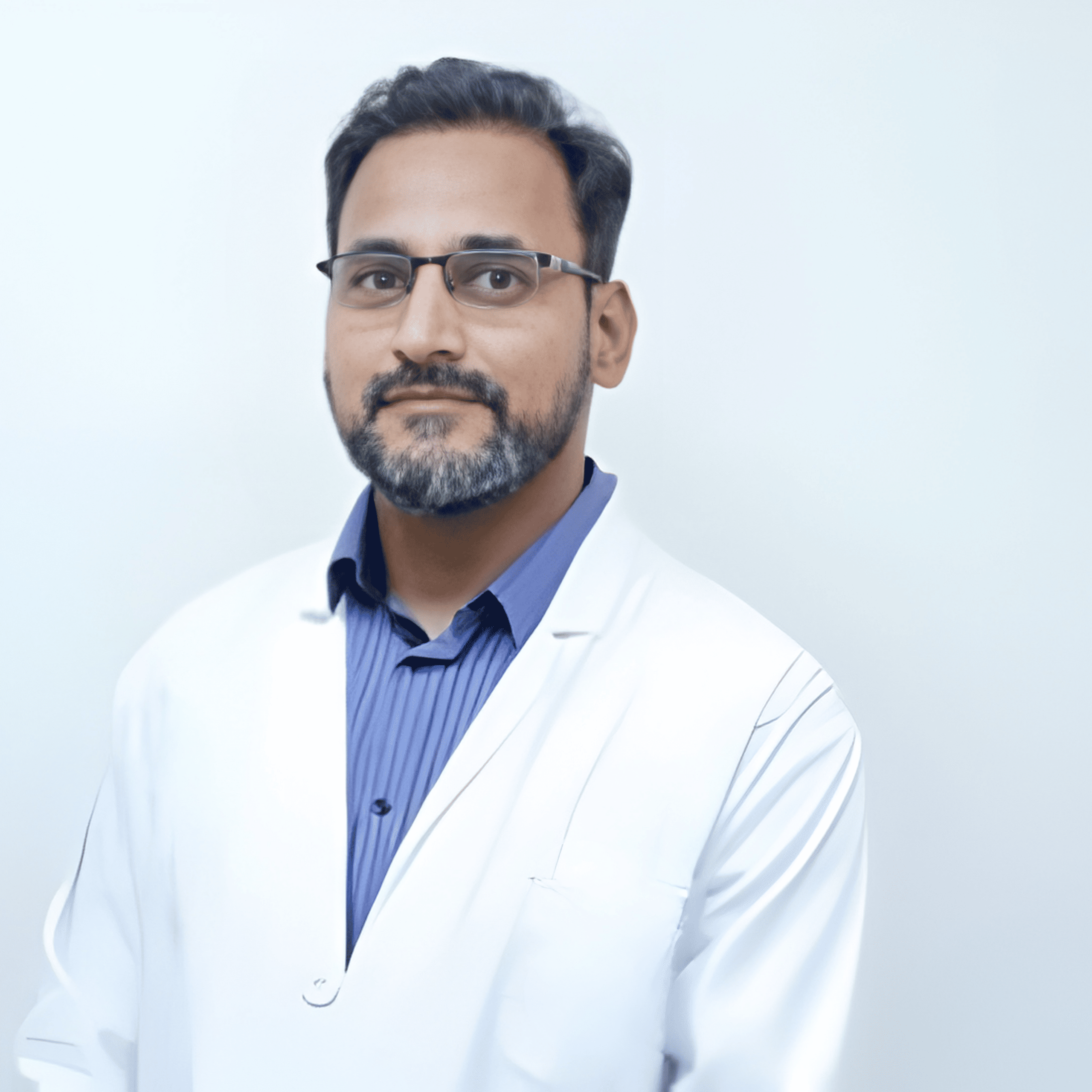
Dr Amit Kumar Srivastava – Arthroscopic & Joint Replacement Surgeon, Delhi
Dr Amit Kumar Srivastava is a highly regarded orthopaedic surgeon specializing in arthroscopic knee and shoulder surgery, ACL reconstruction, and joint replacement in Delhi NCR. Key credentials and differentiators:
- Extensive experience in arthroscopic ACL reconstruction surgery in Delhi using hamstring and patellar tendon grafts.
- Trained in sophisticated minimally invasive and anatomic approaches for ACL reconstruction.
- Capable of handling difficult cases, multi-ligament injuries, revision ACL surgery, and ACL + meniscus repair.
- Patient satisfaction with return-to-sport outcomes is consistently good.
- Precision and safety are ensured by using cutting-edge arthroscopic equipment.
- Accessible consultation process, comprehensive evaluation, and honest surgical recommendations.
Patients travel to Dr Amit Kumar Srivastava from across Delhi, Noida, Gurgaon, Faridabad, Ghaziabad, and other parts of NCR for knee ligament surgeries.
Cost of ACL Surgery in Delhi: What to Expect
ACL reconstruction surgery cost in Delhi depends on several factors:
Factors affecting cost:
- Hospital type (private multi-speciality vs smaller surgical centre)
- Type of graft used (hamstring, patellar tendon, allograft)
- Implant quality (domestic vs imported fixation devices)
- Duration of hospitalisation
- Types of anesthesia
- Pre-operative tests (MRI, bloodwork)
- Post-operative physiotherapy programme
General price range in Delhi NCR:
- Arthroscopic ACL reconstruction: ₹80,000 – ₹2,00,000+
- High-end private hospitals with imported implants may cost more
- Government / CGHS empanelled hospitals offer lower costs for eligible patients
For an accurate cost estimate specific to your case, consult Dr Amit Kumar Srivastava and his coworkers. After analysing your MRI and clinical examination, we will provide you with a personalised quote. Many insurance companies support ACL reconstruction; our staff can assist with pre-authorisation.
Why Choose Dr Amit Kumar Srivastava for ACL Surgery in Delhi?
Ranked among the best arthroscopic surgeons in Delhi NCR for knee ligament procedures, not based on claims, but on documented patient outcomes
- Specialist focus: Dedicated knee and shoulder arthroscopic surgeon, not a generalist doing occasional ligament cases
- Minimally invasive technique: Arthroscopic approach means less pain, faster recovery, sand maller scars
- Anatomic reconstruction: Graft placed at the exact native ACL footprint, superior stability outcomes
- Transparent consultation: Honest assessment of whether you need surgery, or whether physio is sufficient
- Comprehensive care: Pre-op planning → surgery → post-op rehab guidance, all coordinated
- Accessible location: Centrally located in Delhi with easy connectivity from Noida, Gurgaon, and Ghaziabad
- Patient-first philosophy: You won’t be rushed into surgery, but you also won’t be left undertreated
Frequently Asked Questions (FAQs)
Can an ACL tear heal on its own without surgery?
Because it lacks an adequate blood supply, the ACL has very limited self-healing potential. Complete ACL injuries rarely heal on their own. Partial tears can be stabilised with physiotherapy, but in the majority of active people, the knee remains unstable over time. Surgery is essential to restore full stability and shield the cartilage from further injury.
How long does ACL reconstruction surgery take?
Arthroscopic ACL reconstruction typically takes 60 to ninety minutes. The procedure is performed under spinal or general anaesthesia, with maximum victims admitted and discharged in 1–2 days.
When can I walk after ACL surgery?
Within 24 to 48 hours of surgery, most patients begin partial weight-bearing on crutches. Walking without crutches is normally possible 3-4 weeks after surgery, depending on pain and swelling control.
What is the arthroscopic ACL reconstruction surgery recovery time?
- Return to desk work: 2–3 weeks
- Return to driving: 4–6 weeks
- Return to light sport/jogging: 4–5 months
- Full return to competitive sport: 6–9 months
- Complete graft maturation: 12–18 months
What happens if I don't get ACL surgery?
When an ACL tear is left untreated, the knee gives way repeatedly. The meniscus and articular cartilage suffer additional injury as a result, leading to the beginning of knee arthritis. Delaying surgery in young, active patients frequently results in a more complicated joint when reconstruction is performed.
Is ACL reconstruction a permanent fix?
ACL reconstruction using your individual tendon (autograft) provides long-term, long-term stability in a significant majority of patients. But breakdowns can happen again, usually due to returning to the game too soon or suffering another disturbing loss. The single most essential issue for long-term graft survival is strict adherence to your rehabilitation protocol.
Which graft is better, the patellar tendon or the hamstring, for ACL surgery?
Both are excellent options with comparable long-term outcomes. Hamstring grafts are used more commonly today due to reduced donor-site discomfort. Patellar tendon (BTB) grafts provide bone-to-bone healing and remain preferred by some elite contact-sport athletes. Dr Amit Kumar Srivastava will recommend the best graft for your specific anatomy and activity goals.
What is the success rate of ACL reconstruction surgery?
Arthroscopic ACL reconstruction has a success rate of 90–95% for return to the patient's pre-injury level of activity when performed by an experienced surgeon and followed by structured physiotherapy. Re-rupture rates are below 5–10% in most published series.
Is ACL surgery covered by health insurance in India?
Yes. The majority of Indian health insurance plans, including both private and government programs (CGHS, ECHS), cover ACL reconstruction. Usually, you'll need an MRI report, a surgeon's referral, and a pre-authorisation letter. Our staff helps with the insurance application procedure.
What is the cost of ACL surgery in Delhi?
The cost of arthroscopic ACL reconstruction in Delhi ranges from approximately ₹80,000 to ₹2,00,000+, depending on the hospital, implants used, and length of stay. For an accurate estimate, please contact our team with your MRI report.
Looking for the best ACL surgery in Delhi NCR or an ACL reconstruction surgeon near you? Dr Amit Kumar Srivastava’s clinic is centrally located and serves all of Delhi NCR. The best time to get evaluated was the day of injury. The second-best time is today.
📅 Schedule a Consultation with Dr Amit Kumar Srivastava
- Clinic Location: Clinic For Bone and Joint Disease – Patparganj 10, Malhan Arcade, 3rd Flr, Behind Dominos, Near Prince Aptts, Dda Market, Patparganj, Delhi-110092
- Clinic Location: Ground Floor, O Pocket, 2 /A-5, opposite Reliance Fresh, near Dilshad Colony, Block O, Dilshad Garden, New Delhi, Delhi, 110095
- Serving: Delhi, Noida, Gurgaon, Faridabad, Ghaziabad, and all NCR
- Appointments: +91-9667134791
- Online Consultation Available: Yes
Bring your MRI report (if done) for a complete evaluation at your first visit.
Trackbacks/Pingbacks