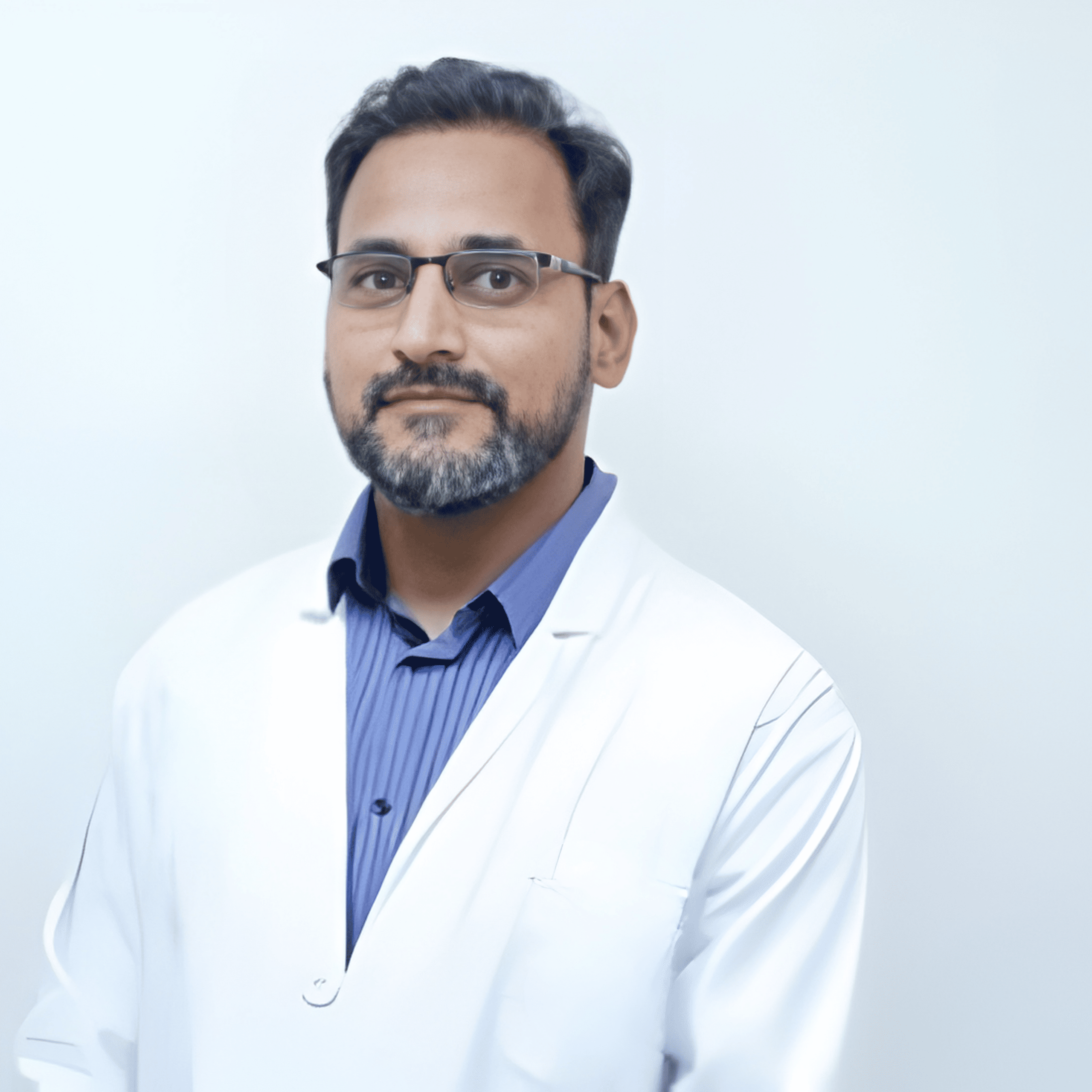
Partial Knee Replacement Surgery in Delhi by Dr. Amit Kumar Srivastava
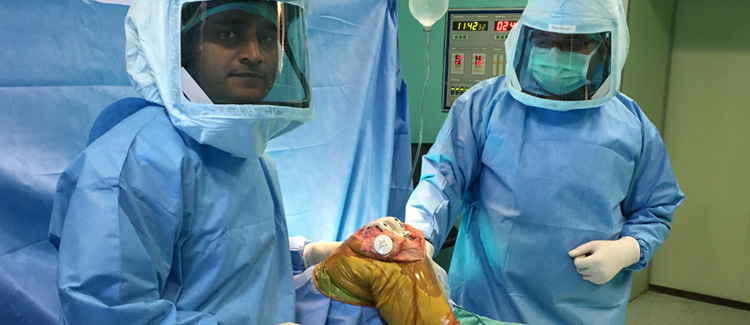
If knee pain causes problems with your daily activities, Dr. Amit Kumar Srivastava partial knee replacement surgery in Delhi offers a precise, minimally invasive option that saves your original knee. Unlike total knee replacement, this breakthrough surgery concentrates on the problematic area of the joint, allowing you to recover faster, have less pain, and return to normal activities sooner.
Whether you have early-stage arthritis or localised knee damage, this method can greatly improve your long-term mobility and quality of life.
What is Partial Knee Replacement?
Partial knee replacement (unicompartmental knee replacement) is a surgical procedure where only the damaged compartment of the knee is replaced with an implant, while healthy bone, cartilage, and ligaments are preserved.
The knee has three compartments:
- Medial (inner)
- Lateral (outer)
- Patellofemoral (front)
If arthritis affects only one of these, partial knee replacement in Delhi is often a better option than replacing the entire joint.
Who is a Candidate for Partial Knee Replacement?
You may be an ideal candidate if you have:
- Knee pain localized to one side of the knee
- Early to moderate osteoarthritis
- Intact ligaments (especially ACL)
- Good range of motion
- Failure of non-surgical treatments (medications, physiotherapy, injections)
You may NOT be suitable if:
- Arthritis affects the entire knee
- Severe deformity or instability is present
- Inflammatory arthritis (like rheumatoid arthritis)
A proper clinical and radiological evaluation is essential to decide suitability.
Benefits vs Total Knee Replacement
Why choose partial over total knee replacement?
- Smaller incision (minimally invasive knee surgery in Delhi)
- Less blood loss
- Faster recovery
- More natural knee movement
- Better preservation of bone and ligaments
- Shorter hospital stay
- Lower risk of complications
However, it’s not for everyone. The key is correct patient selection.
Procedure Overview – What Happens During Surgery?
- Surgery is performed under spinal or general anesthesia
- A small incision is made over the knee
- Only the damaged cartilage and bone are removed
- A high-precision implant is placed in the affected compartment
- Surrounding healthy structures are preserved
The procedure typically takes 1–1.5 hours and is highly precise when performed by an experienced surgeon.
Recovery Timeline
First Week
-
Walking begins within 24 hours.
-
Mild soreness and edema are normal.
-
Physiotherapy starts early.
2–6 Weeks
-
Gradual return to regular activities.
-
Improved mobility and less discomfort.
-
Walking without assistance in many circumstances.
6–12 Weeks
-
Significant improvement in strength and function.
-
Most patients resume normal routines.
3 Months After Partial Knee Replacement
- Near-normal knee function.
- Minimal pain.
- Return to low-impact activities like walking, cycling, and driving.
Hospital Stay & Rehabilitation
- Hospital stay: 1 to 3 days.
- Early mobilisation is encouraged.
- Structured physiotherapy program.
- Home workouts are essential for optimal healing.
When Can I Return to Work?
- Desk job: 2–3 weeks.
- Moderate activity jobs: 4–6 weeks.
- Physically demanding work: 8–12 weeks.
Recovery depends on your overall health and adherence to rehab.
Risks and Safety
Partial knee replacement is generally safe, but like any surgery, it carries some risks:
- Infection.
- Blood clot.
- Implant loosening with time.
- The progression of arthritis in other compartments.
Choosing an experienced surgeon significantly reduces these risks.
Success Rate
- Success rate: 90–95% in properly selected patients.
- Long-term outcomes are excellent.
- High patient satisfaction due to the natural feel of the knee.
Knee Surgery Cost in Delhi
The cost of partial knee replacement in Delhi depends on:
- Types of hospitals.
- An implant was used.
- Surgeon’s expertise.
- The patient’s condition.
On average, it is more cost-effective than total knee replacement due to shorter hospital stay and faster recovery.
Why Choose Dr. Amit Kumar Srivastava in Delhi?
When it comes to partial knee replacement surgery in Delhi, experience and precision matter.
Dr. Amit Kumar Srivastava offers:
- Experience with minimally invasive knee surgery.
- Advanced surgical methods and implants.
- Strong emphasis on joint preservation
- Personalized treatment planning.
- High success rate and patient satisfaction
- Practice in reputable hospitals throughout Delhi and East Delhi.
His approach is simple: avoid total knee replacement whenever possible and preserve the natural joint.
Frequently Asked Questions (FAQs)
What is replaced in a partial knee replacement?
An implant is used to replace only the damaged compartment of the knee joint, leaving healthy bone, cartilage, and ligaments intact.
What is the partial knee replacement success rate?
The success rate is around 90–95% in properly selected patients, with long-lasting results and high patient satisfaction.
What can I expect three months following a partial knee replacement?
By 3 months, most patients experience:
- Minimal pain
- Improved strength
- Near-normal walking
- Return to daily activities
Who is a candidate for partial knee replacement?
Patients with localized knee arthritis, good ligament stability, and preserved joint movement are ideal candidates.
What is the recovery time for partial knee replacement?
Most patients recover within 6–12 weeks, with significant improvement seen in the first 4–6 weeks.
What is the cost of partial knee replacement in Delhi?
Costs vary by hospital and implant choice, but total knee replacement is generally more expensive due to a faster recovery and shorter hospital stay.
Is partial knee replacement a better option than total knee replacement?
For the right patient, yes. It offers:
- Faster recovery
- Less pain
- More natural movement
But if arthritis affects the entire knee, total knee replacement may be necessary.
If you’re struggling with knee pain and want to explore partial knee replacement in Delhi, don’t delay treatment.
👉 Early intervention can prevent further damage and improve outcomes.
Book your consultation with Dr. Amit Kumar Srivastava today to get a personalized evaluation and treatment plan.